An interactive visual library of science in 3D.
200+ real-time simulations across cosmology, biology, medicine, engineering, and more — each one a standalone React component, published open source.
Cosmos
26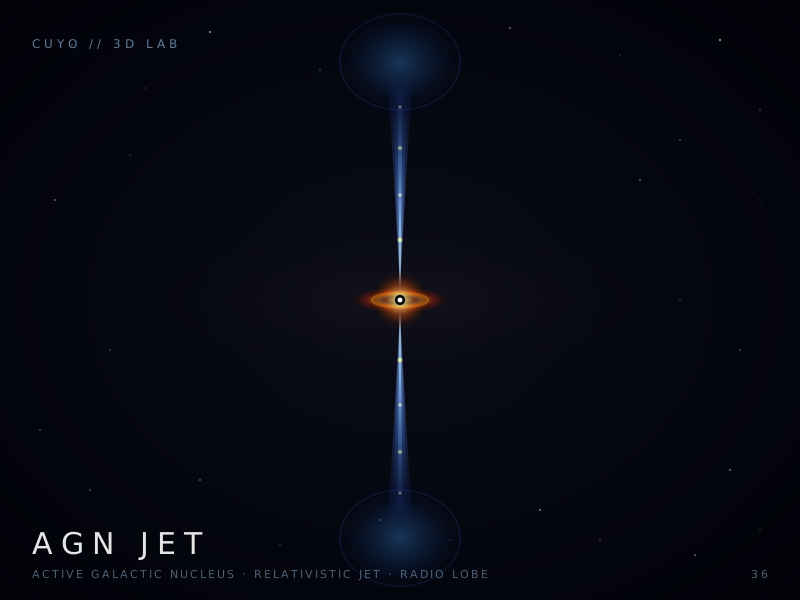 01
01AGN Jet
A supermassive black hole launches twin relativistic jets perpendicular to its accretion disk, extending millions of light-years to glowing radio lobes.
 02
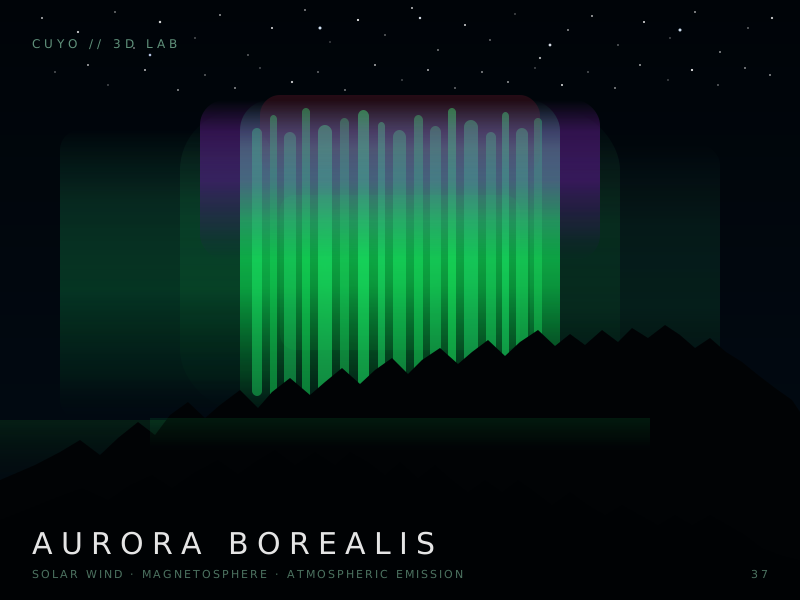
02Aurora Borealis
Ground-level view of the northern lights — rippling green-purple curtains of atmospheric emission above a dark mountain horizon.
 03
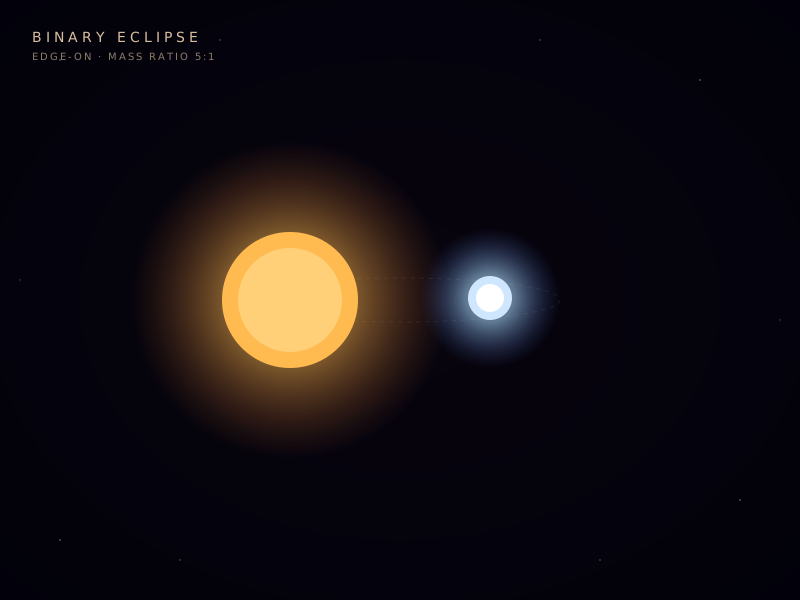
03Binary Eclipse
An orange giant and a blue dwarf circling their barycentre — viewed nearly edge-on so they take turns eclipsing.
 04
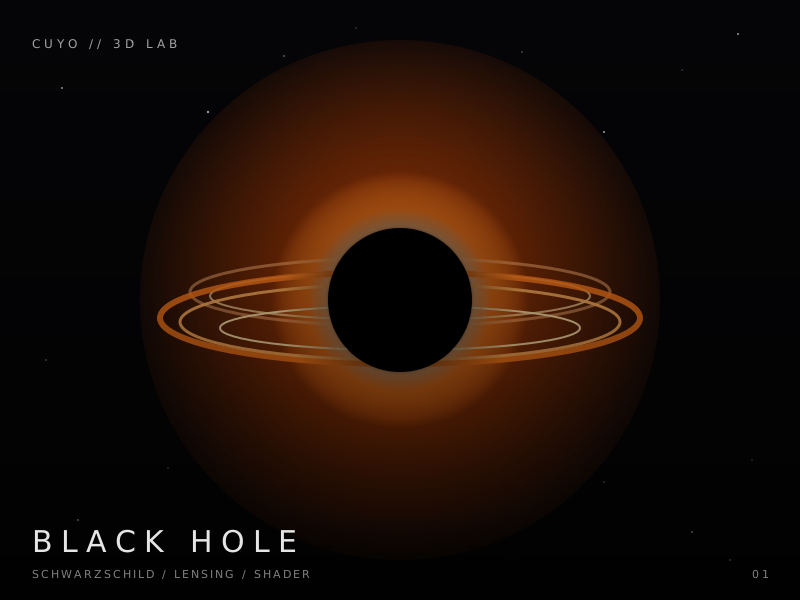
04Black Hole
A Schwarzschild lens bends and duplicates background starlight around an event horizon, wrapped by a turbulent hot accretion disk.
 05
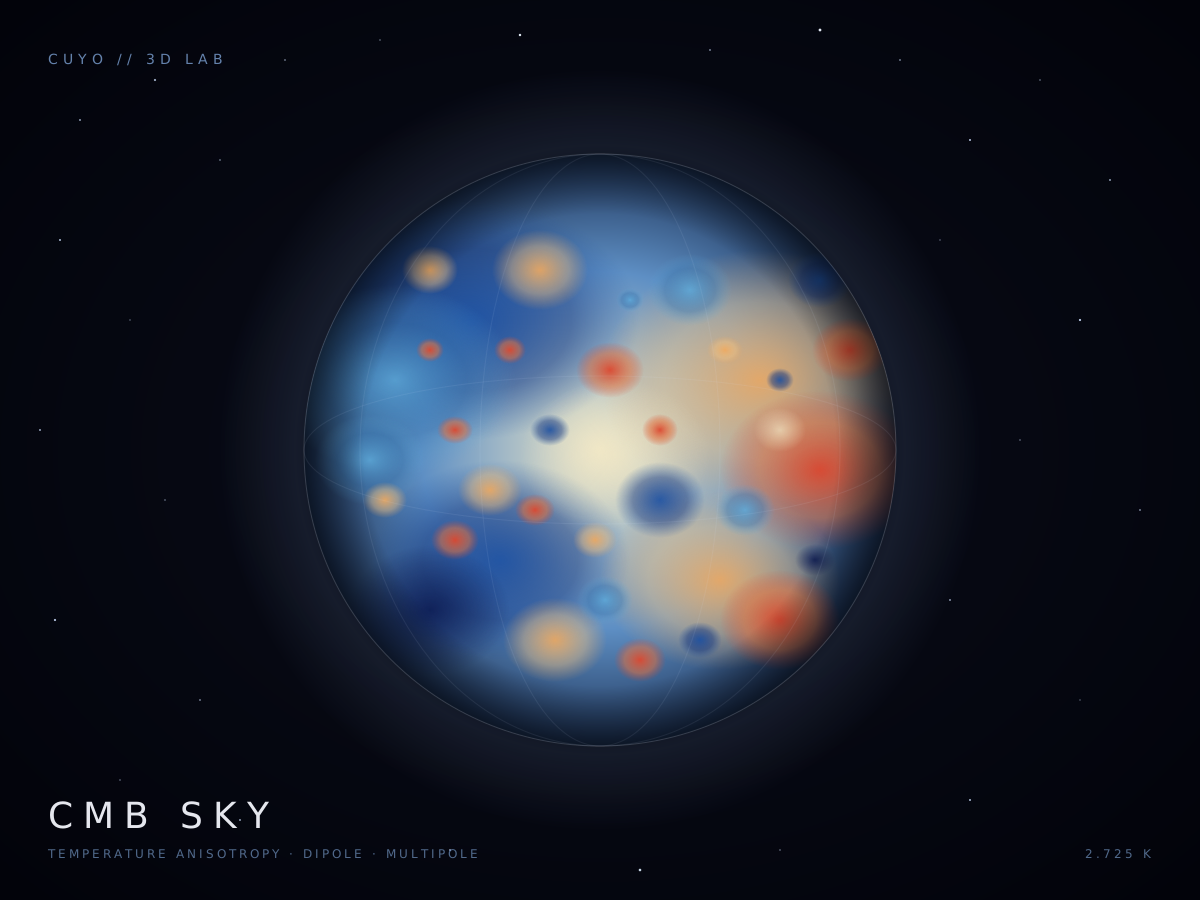
05CMB Sky
A full-sky temperature anisotropy map blends dipole motion with higher-order multipole patterns.
 06
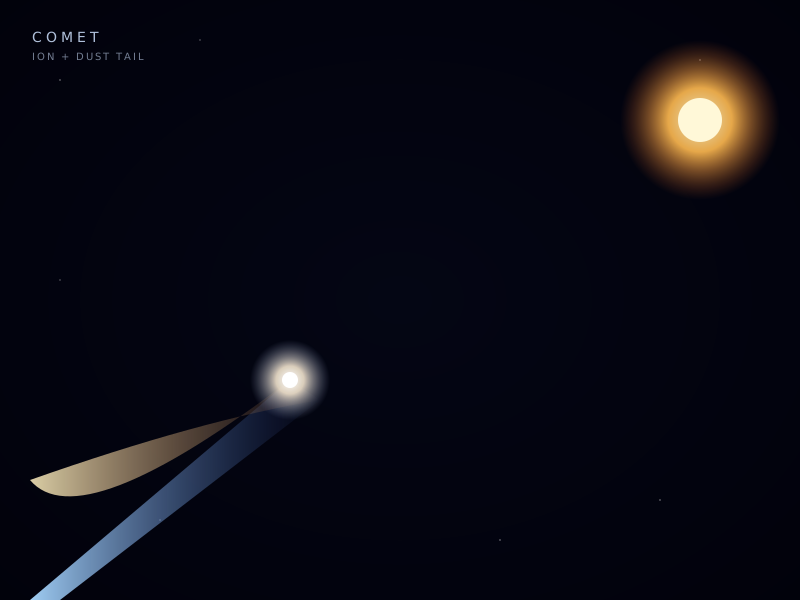
06Comet
An eccentric-orbit comet shedding two physically distinct tails: fast blue ions, slow curving dust.
 07
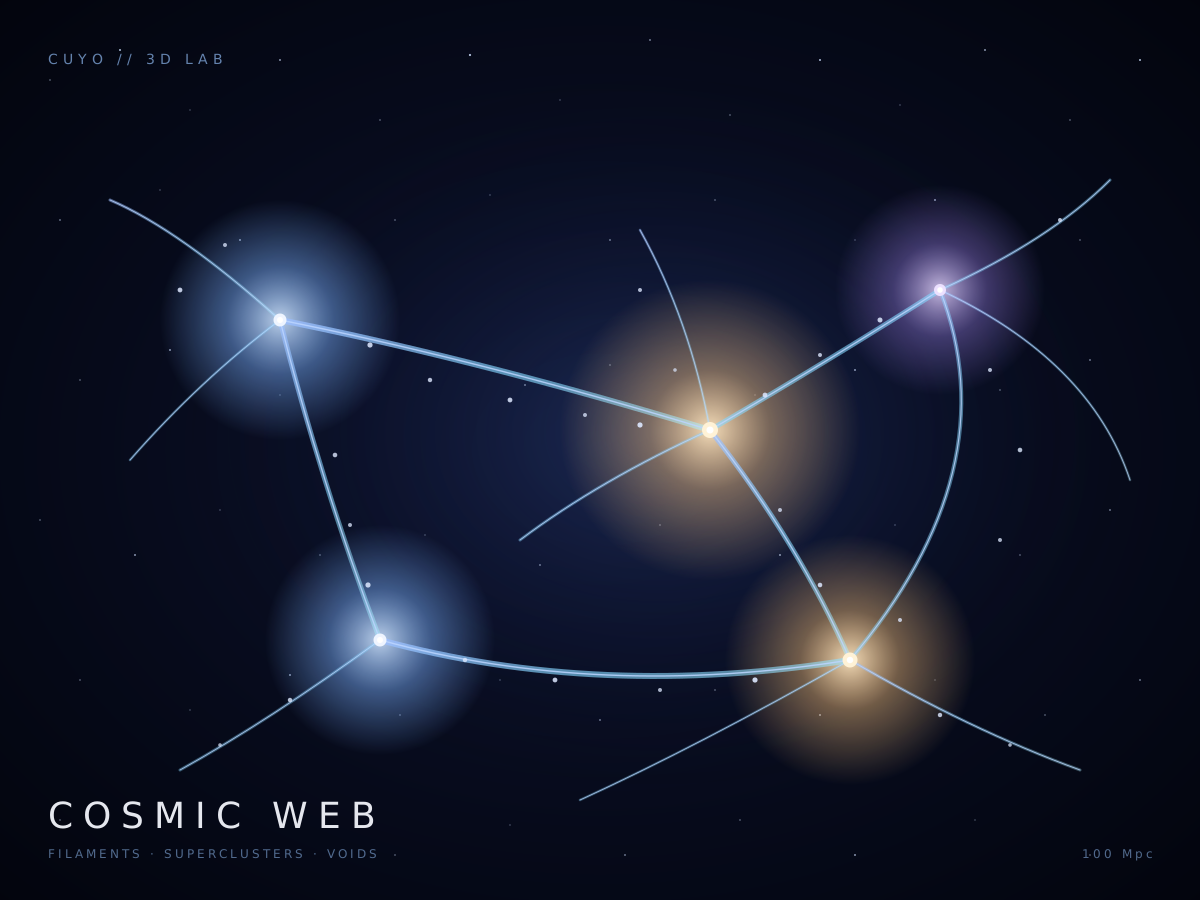
07Cosmic Web
Matter nodes and filaments form a large-scale network, highlighting the universe's sponge-like structure.
 08
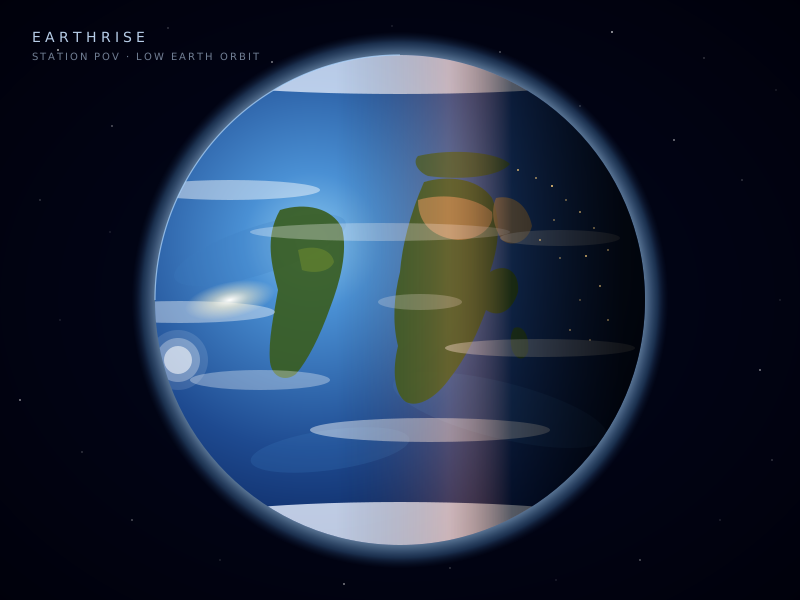
08Earthrise
First-person view from a low-orbit space station — procedural continents, drifting clouds, city lights, and a glowing atmospheric limb.
 09
09Einstein Ring
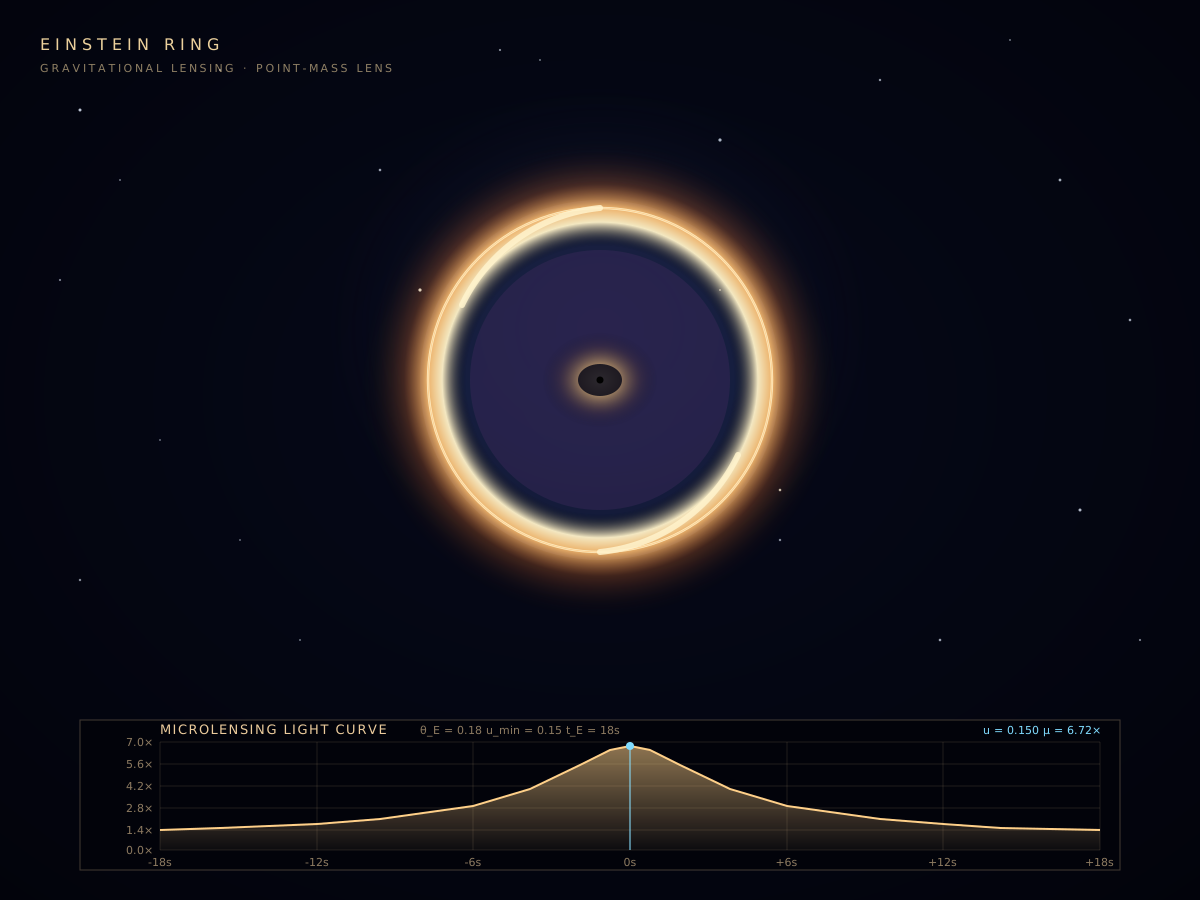
A near-perfect source-lens alignment forms a bright Einstein ring, with magnification peaking as the source crosses the caustic.
 10
10Exoplanet Transit
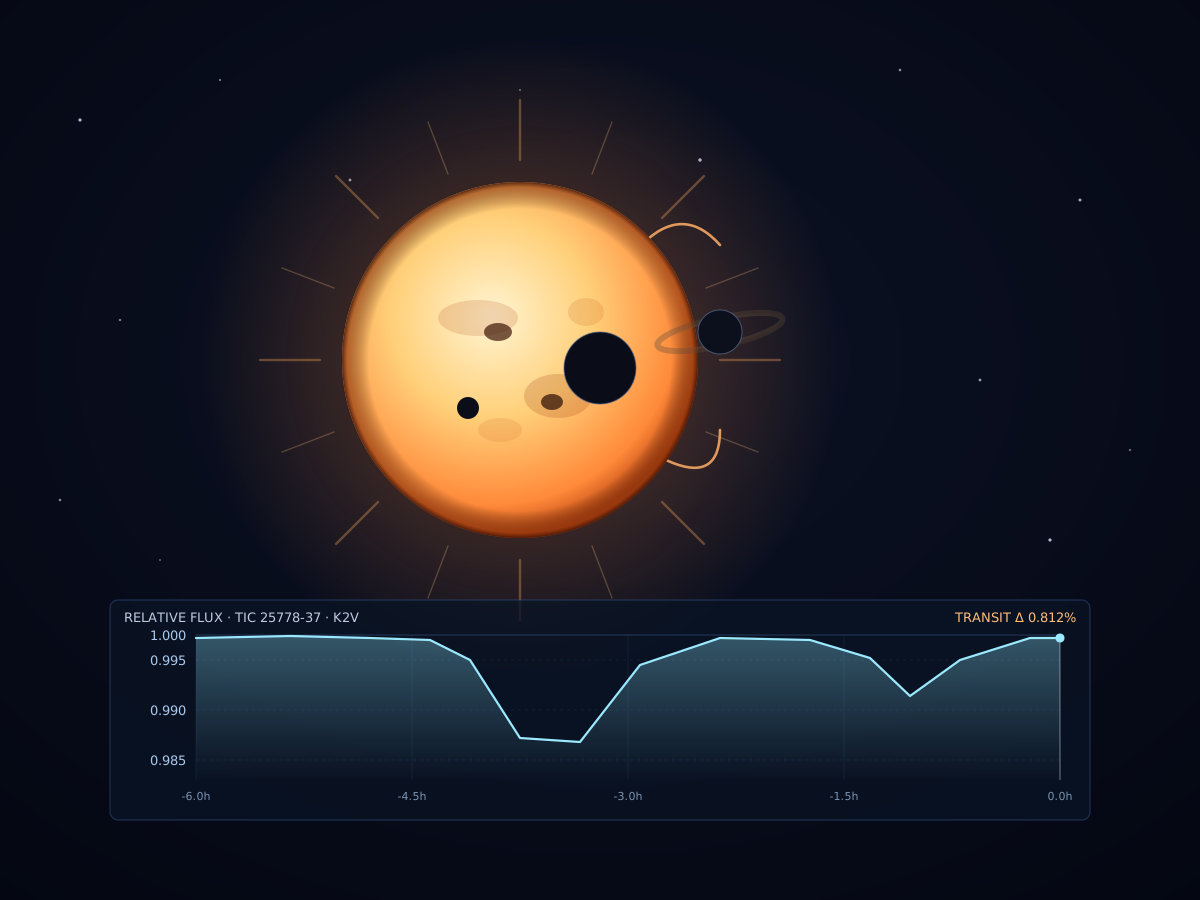
A planet crossing its host star creates a periodic brightness dip, shown with a live light curve.
 11
11Galaxy Merger
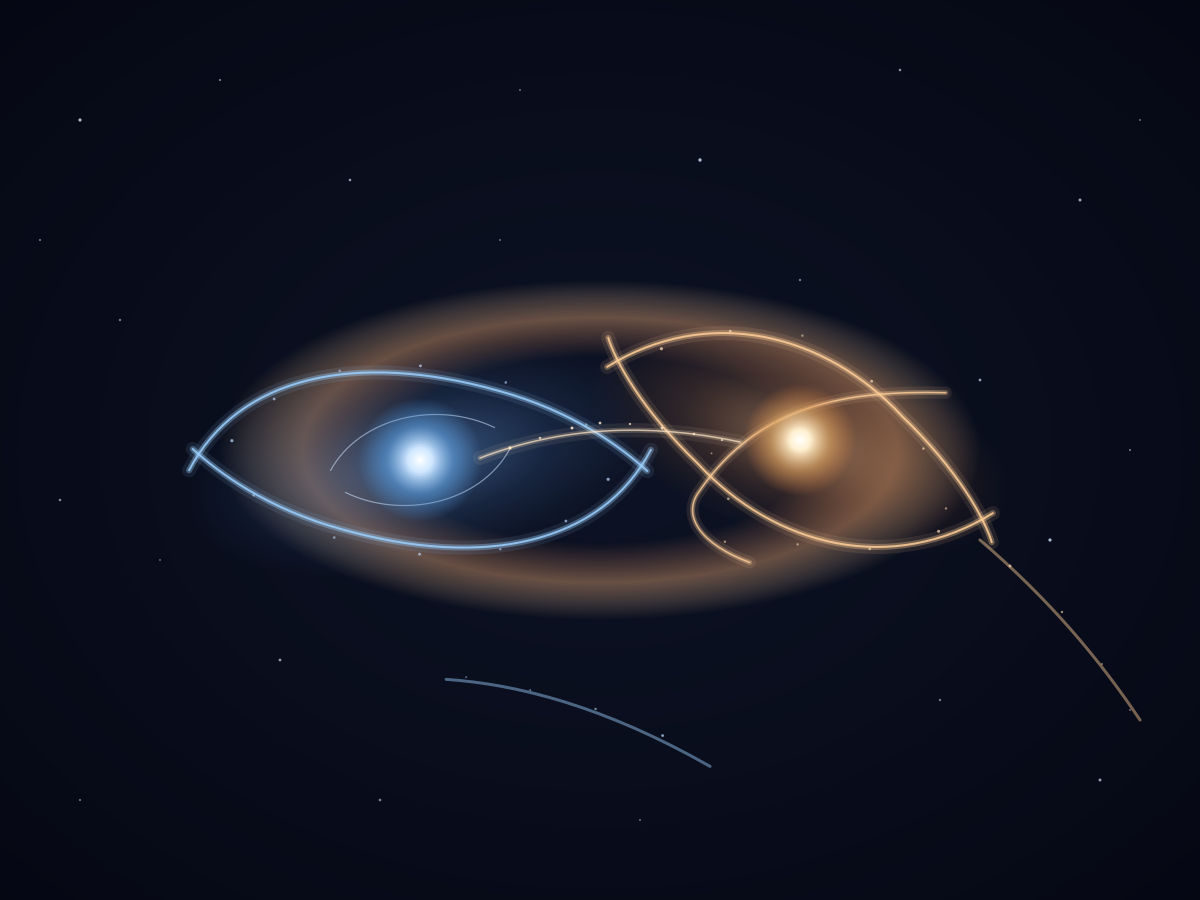
Two spiral galaxies approach, exchange tidal tails, and distort each other before coalescence.
 12
12Globular Cluster
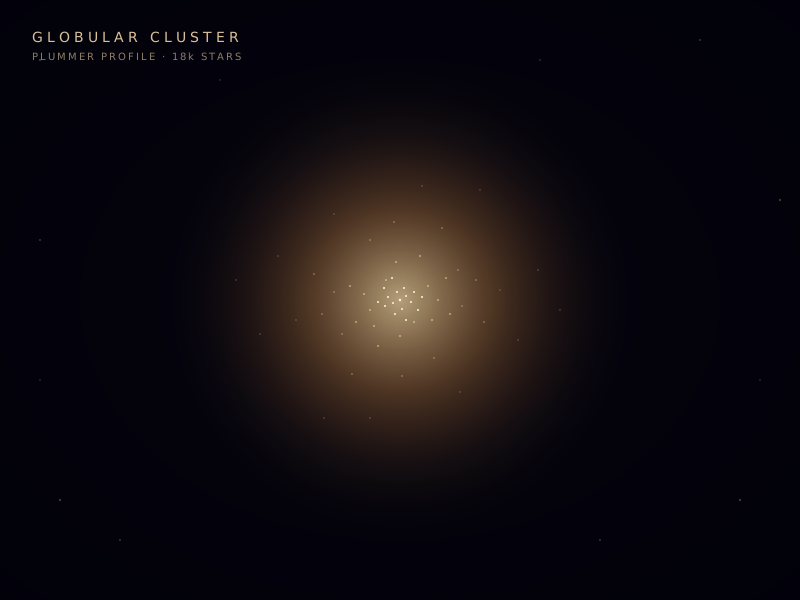
Tens of thousands of old stars packed into a Plummer-profile sphere — Population II yellows, the rare blue straggler.
 13
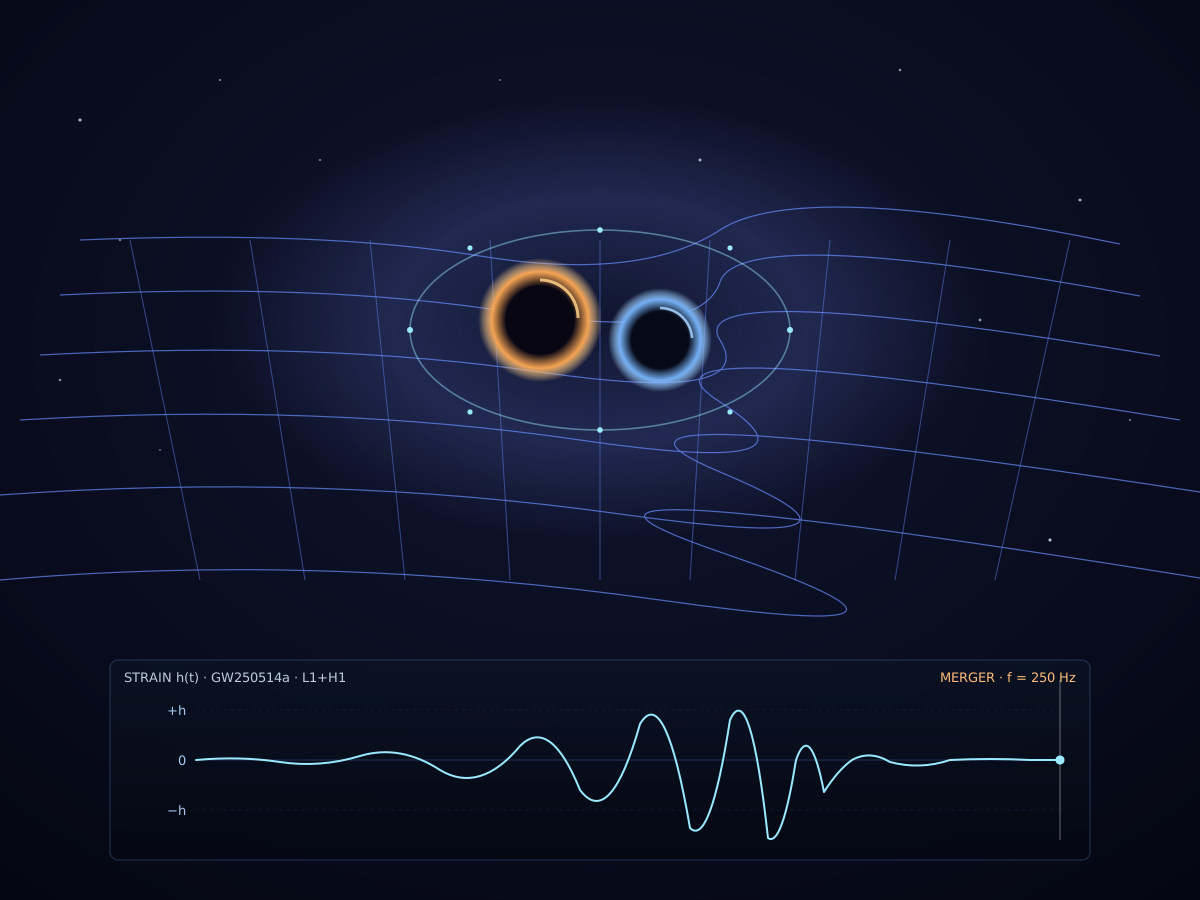
13Gravitational Wave Merger
A compact binary inspirals, merges, and rings down while a chirp waveform rises in frequency and amplitude.
 14
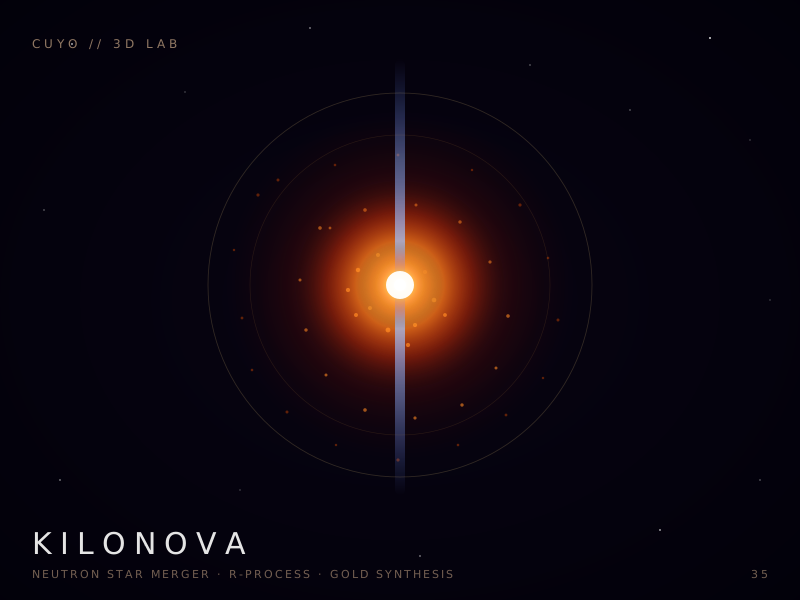
14Kilonova
Two neutron stars spiral together in a chirping inspiral, merge in a blinding flash, then eject red-gold r-process material — the forge of gold and platinum.
 15
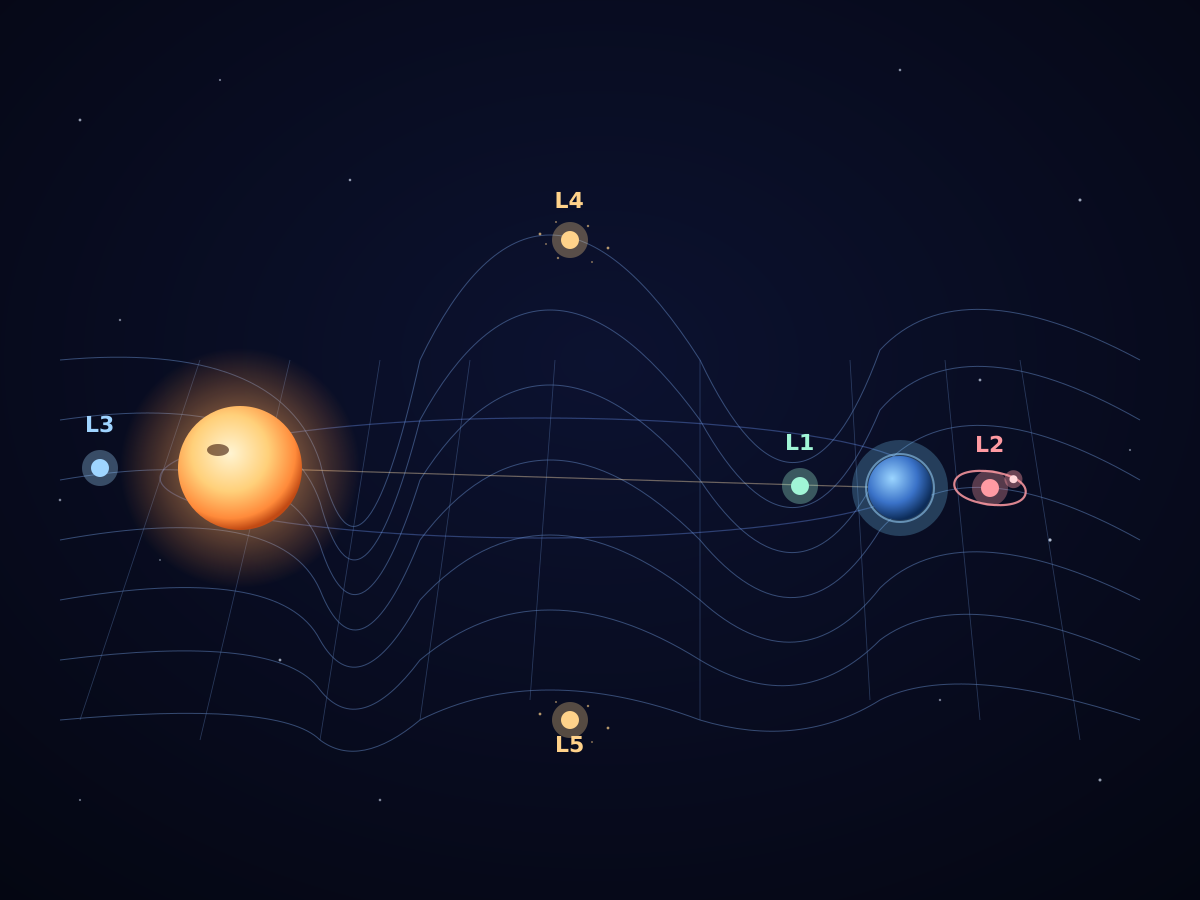
15Lagrange Points
The five Sun-Earth equilibrium points are shown in the rotating frame, with a sample halo orbit near L2.
 16
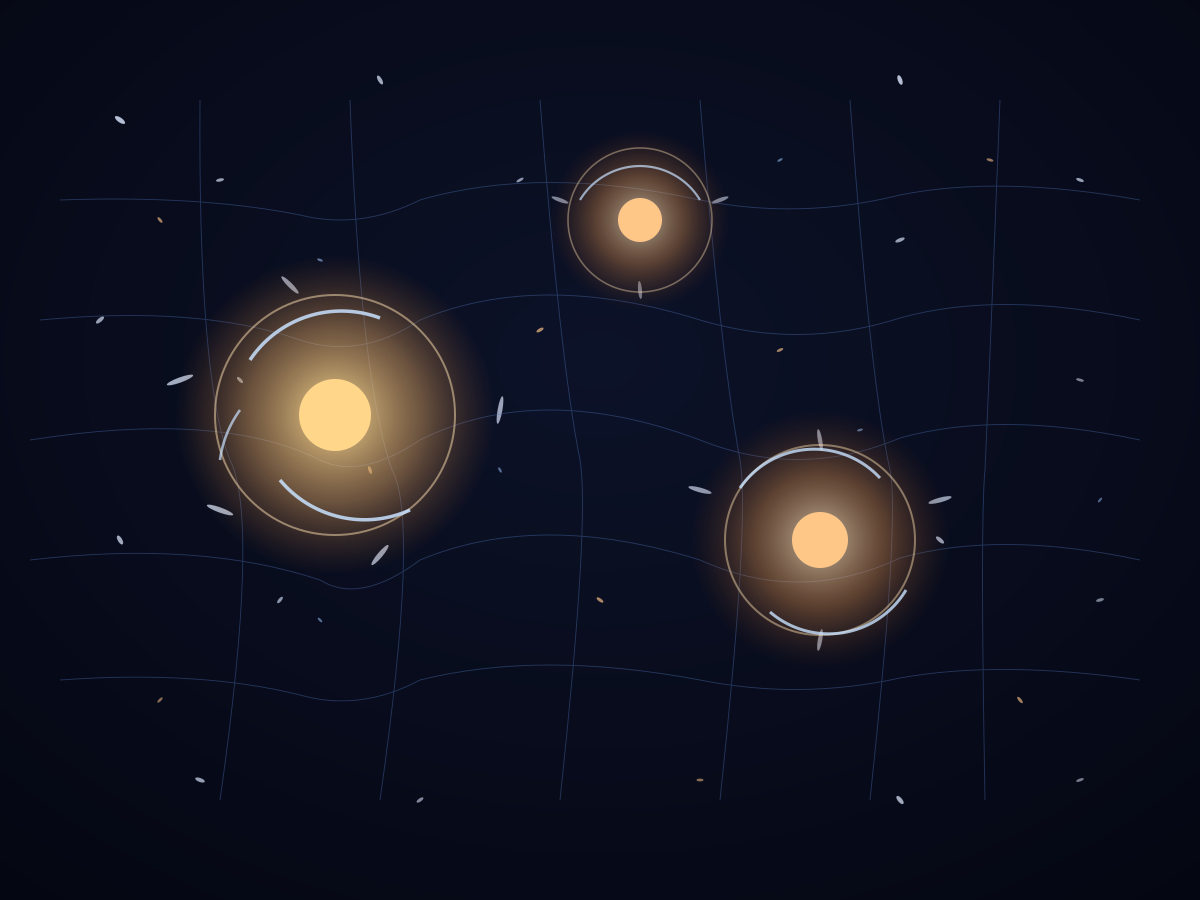
16Lensing Survey
Multiple foreground lenses shear and stretch distant galaxy images into arcs across a synthetic survey field.
 17
17Magnetosphere
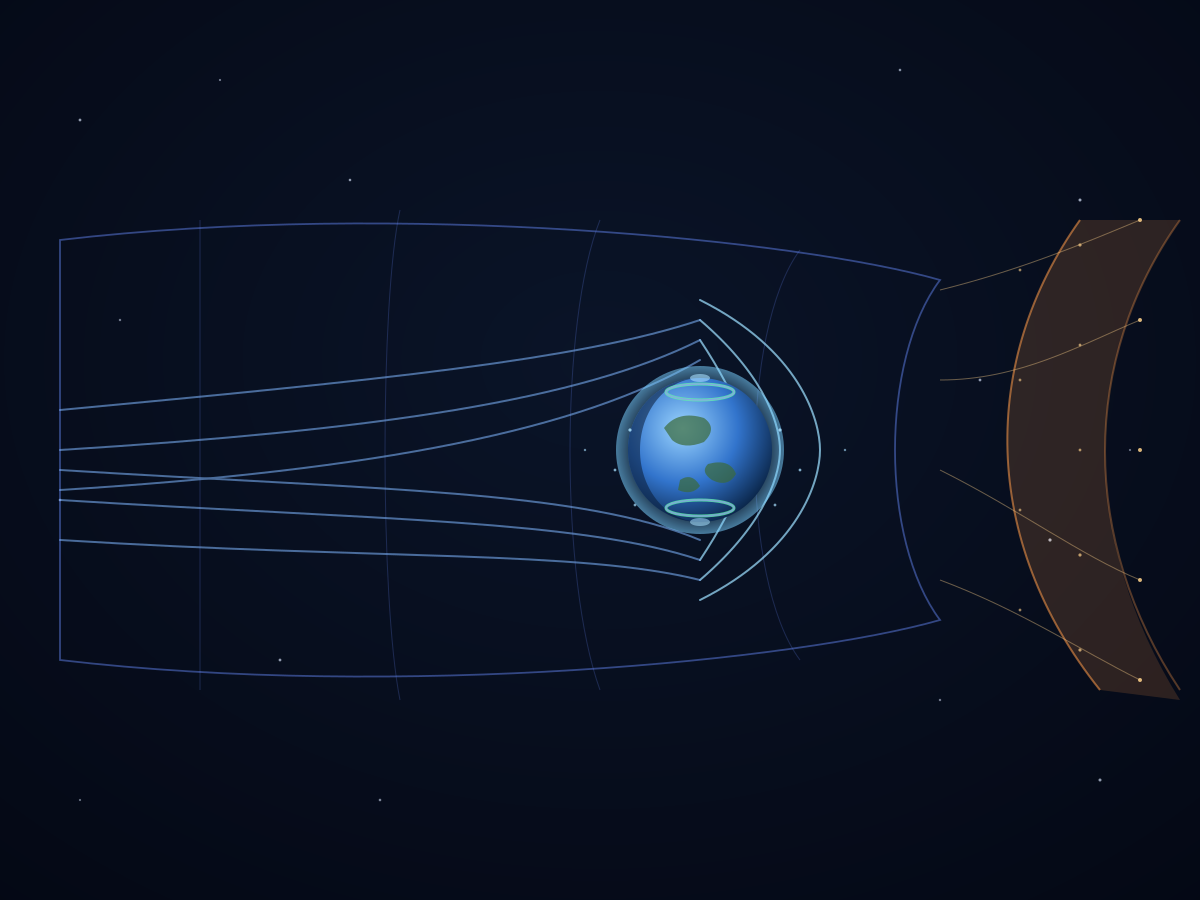
Solar wind streams past Earth and bends around magnetic field lines, with auroral arcs pulsing at the poles.
 18
18Milky Way
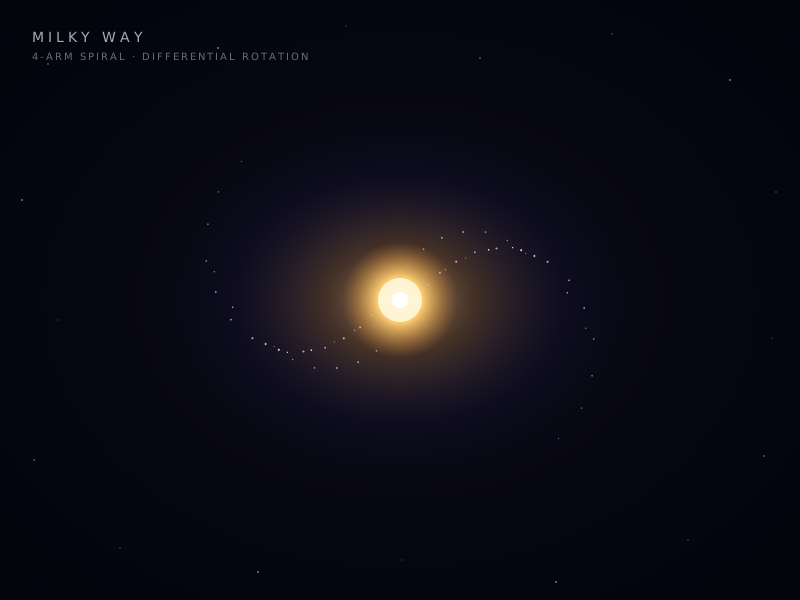
A four-armed spiral galaxy with 70k stars, a bulge, a halo, and live differential rotation — all in one shader.
 19
19Nebula
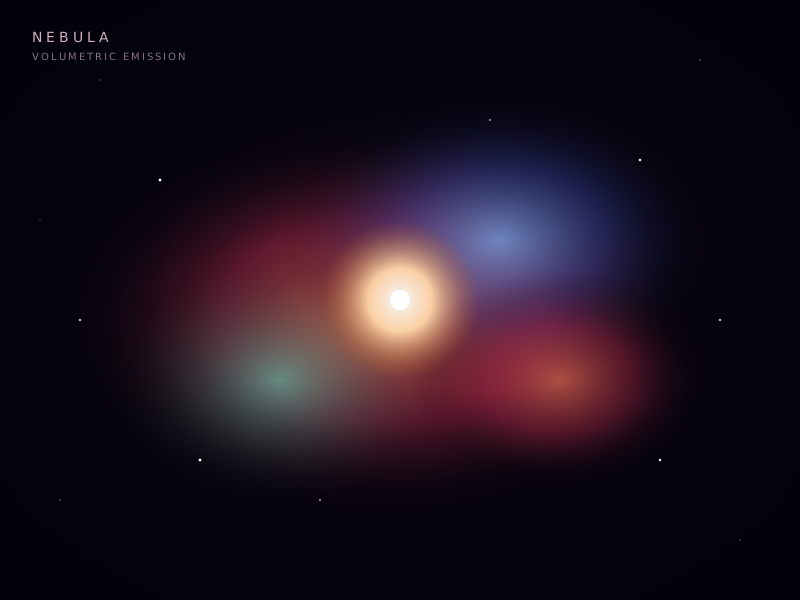
Volumetric ray-march through a clumpy cloud lit by a young hot star — Hα red, OIII teal, and reflection blue.
 20
20Planetary Nebula
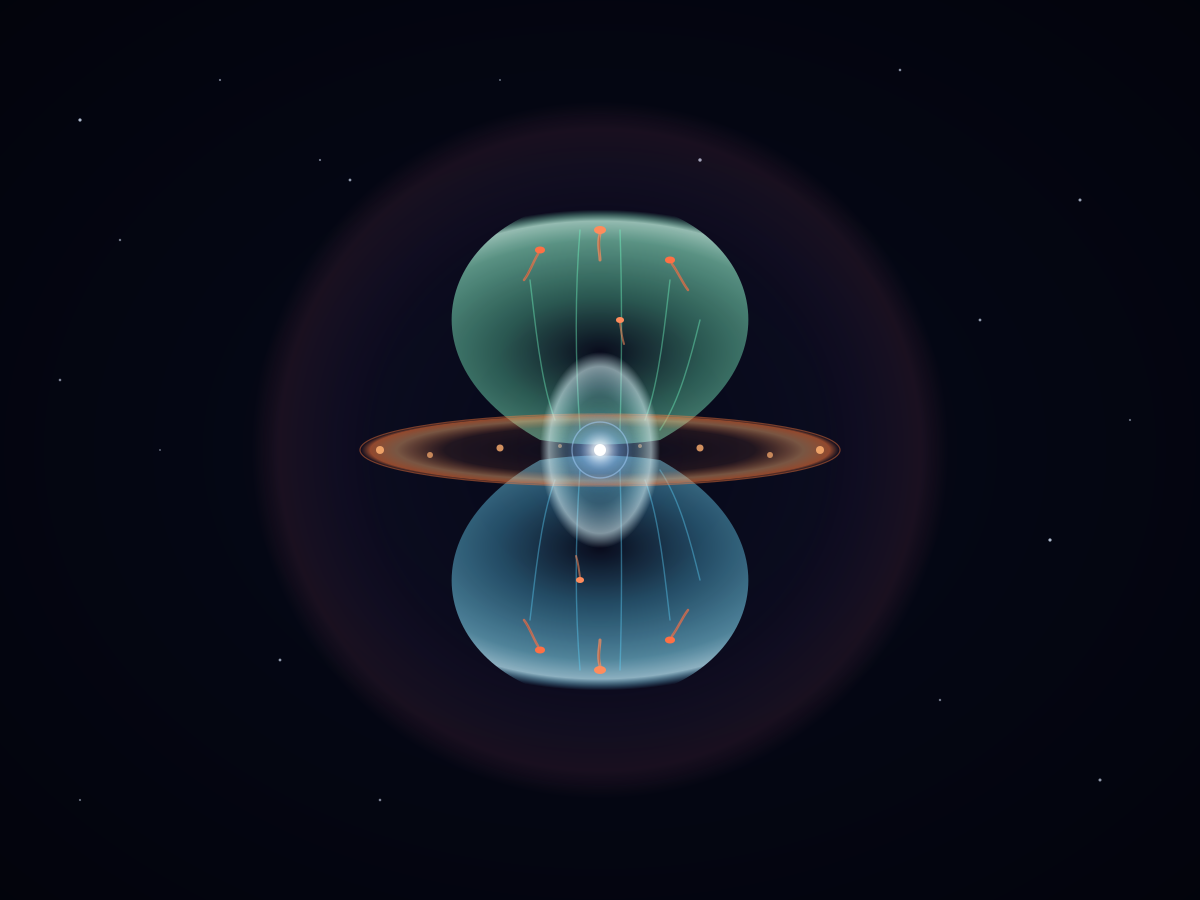
A dying sun-like star's expelled shells glow in concentric layers — teal inner ring, blue mid shell, deep indigo halo, and a red equatorial disk around a central white dwarf.
 21
21Protoplanetary Disk
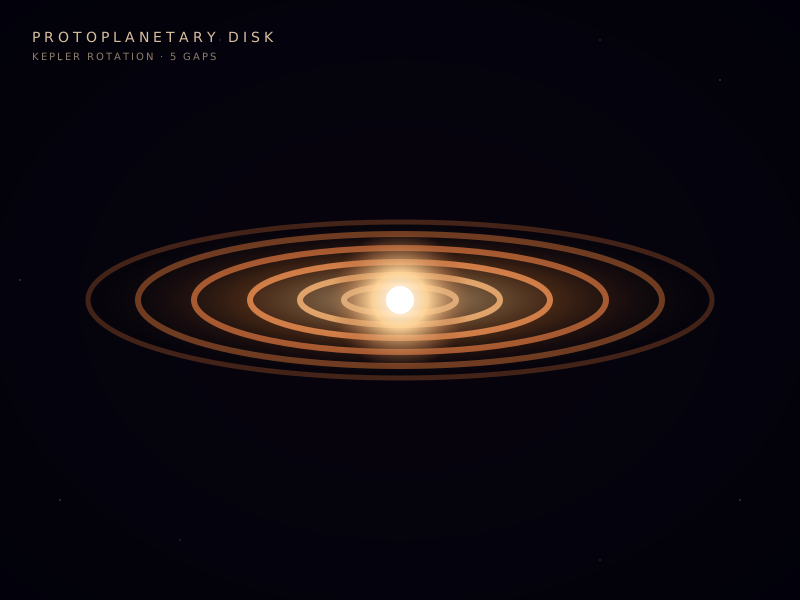
A young star ringed by Keplerian dust, with five dark gaps carved by forming planets — a stylised HL Tau.
 22
22Pulsar
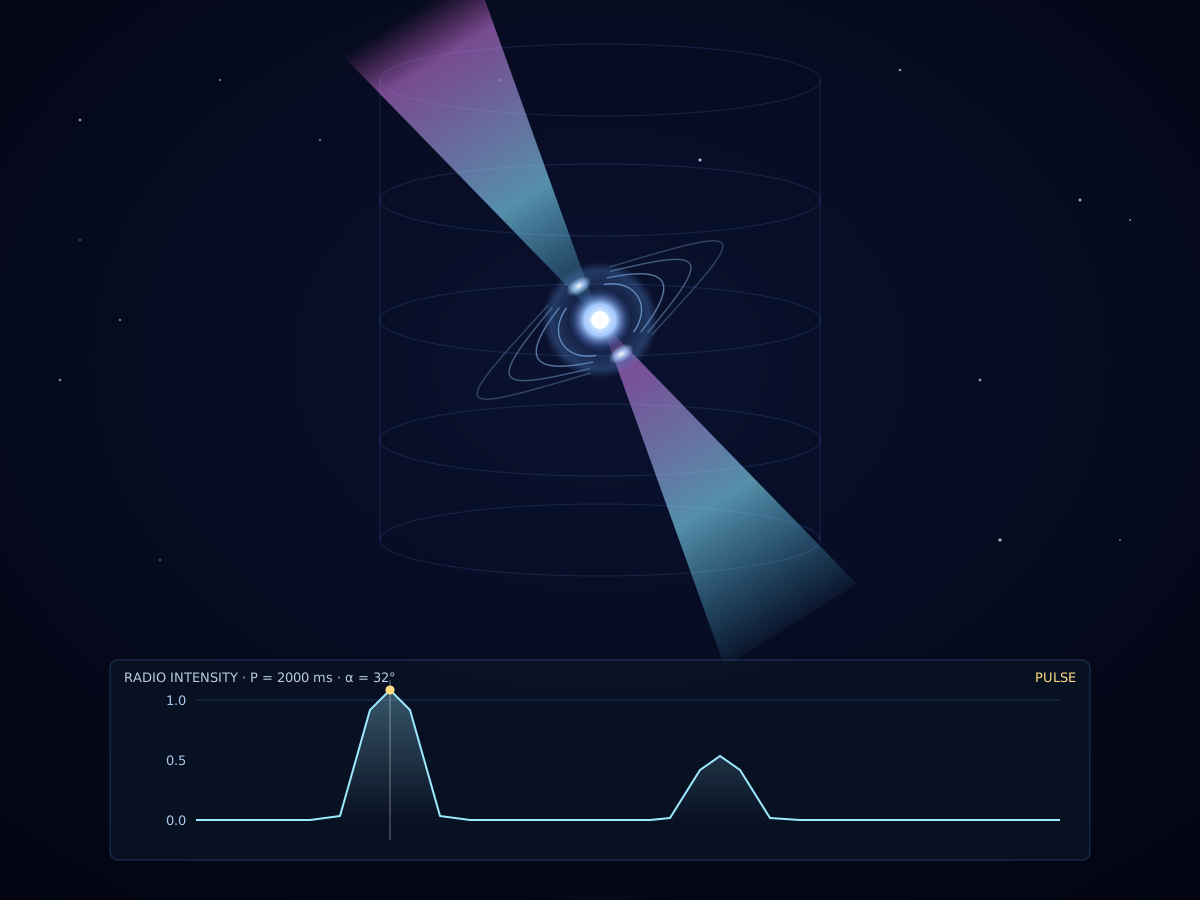
A neutron star with magnetic poles tilted from its rotation axis — twin beams sweep the sky like a lighthouse.
 23
23Solar System
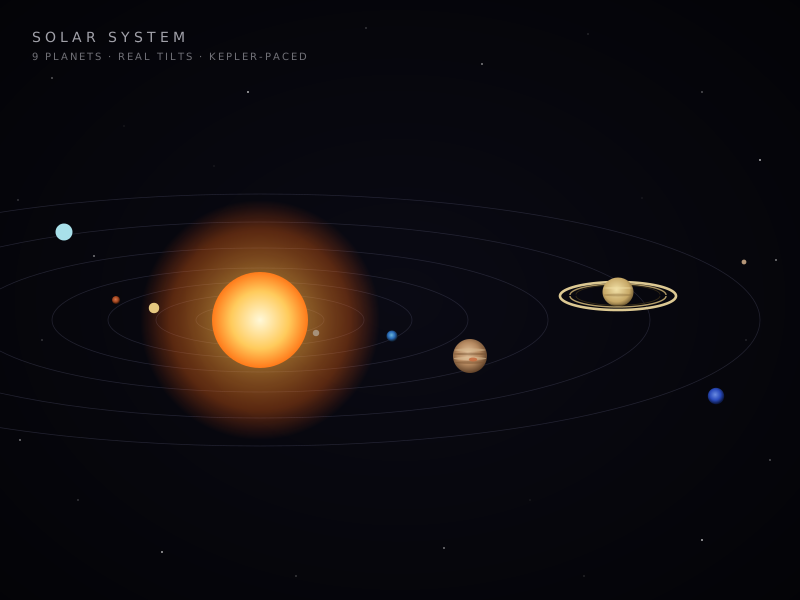
The Sun and nine planets with real axial tilts, Kepler-paced orbits, and Saturn's Cassini-divided rings.
 24
24Supernova
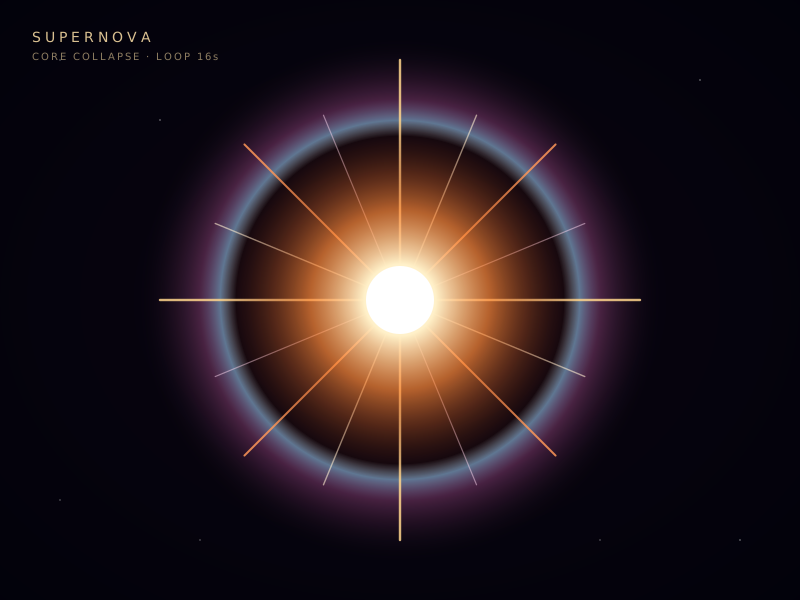
Core collapse, ionising flash, expanding shock, and slowly fading remnant — a 16-second loop of stellar death.
 25
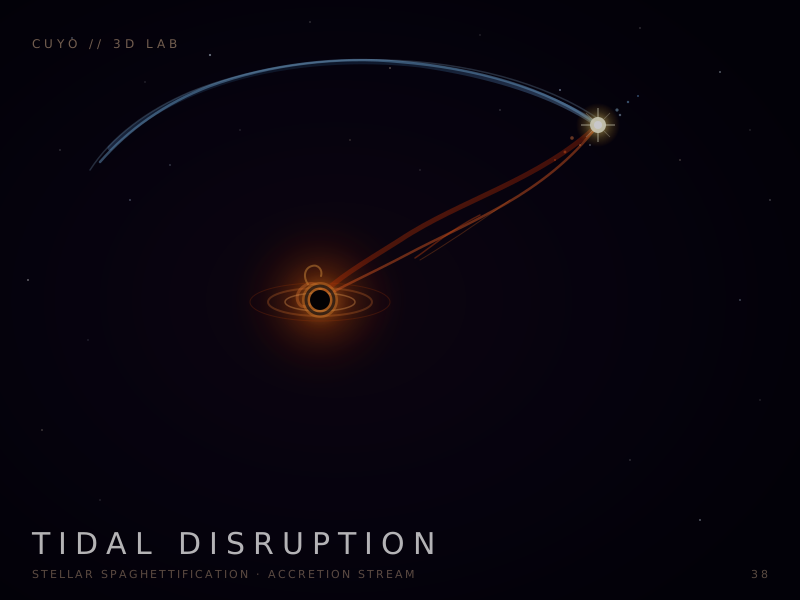
25Tidal Disruption
A star strays too close to a supermassive black hole — tidal forces spaghettify it into a stream, half escaping, half spiralling inward to form an accretion flare.
 26
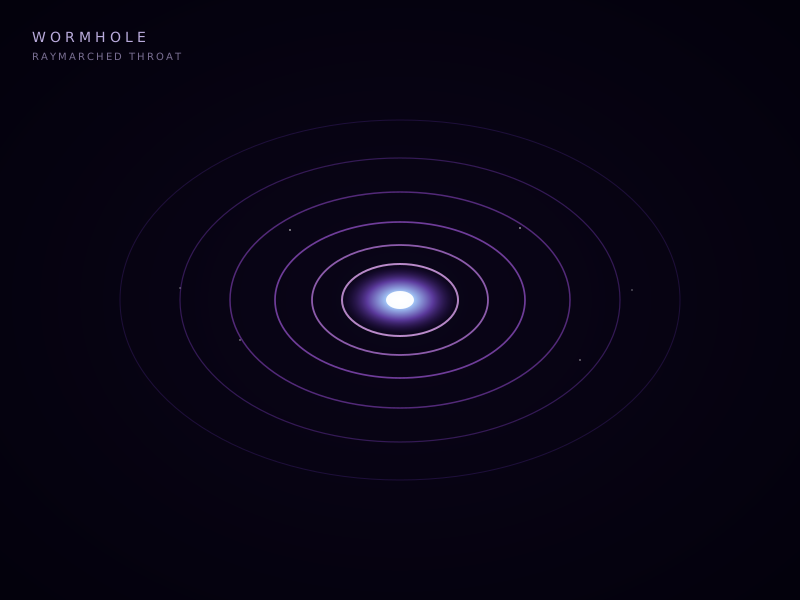
26Wormhole
A traversable tunnel through curved spacetime with a living interior — flowing star streaks and chromatic walls recede toward the far mouth.